Zvjezdani Vrt
The premise
Zvjezdani Vrt begins from a practical question kept under conceptual pressure: what kind of artwork remains ethically legible here, where “context” functions as a regime of constraints (soil, labour, weather, neighbourliness, and the slow arithmetic of upkeep). We looked for a form able to sustain the residency while exceeding it, producing effects that can be felt, checked, and tended. Usefulness becomes a criterion that can be audited in the land itself, in village life, and in the conditions the residency can realistically carry. The garden proposes an artwork that operates as infrastructure, and an infrastructure that insists on being read as an artwork.
The structure
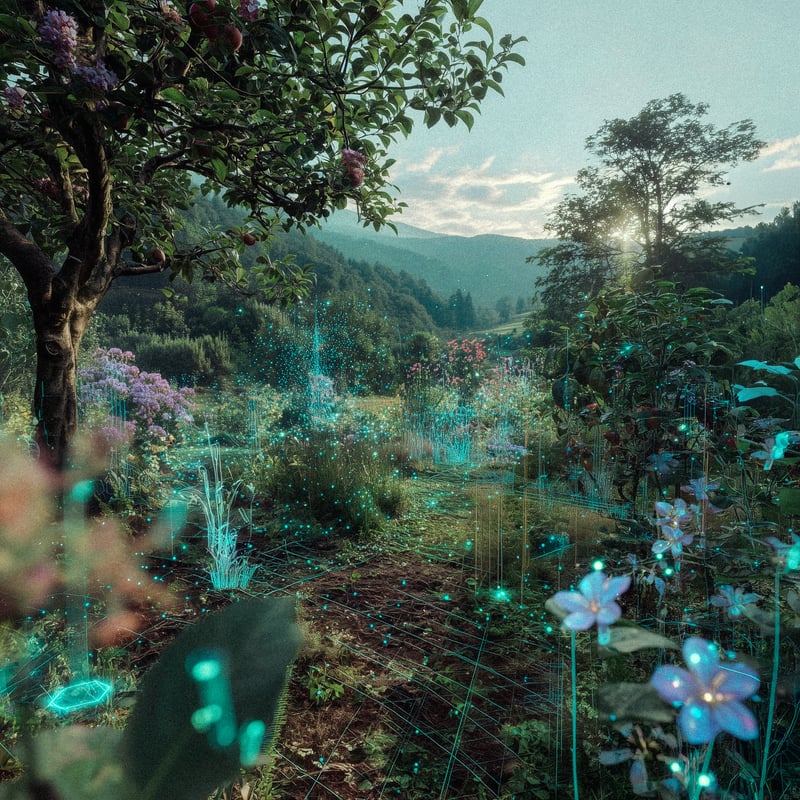
Zvjezdani Vrt exists twice. In Mijakovići, on the slopes of Mount Perun, plants take root in soil. Online, the same garden persists as a structured register of coordinates, identifiers, messages, and generated codes, each entry carrying a position and an inscription. These two instantiations function as coupled layers of one work: planting activates registration, and registration commits the work to care. The physical garden is available to presence, touch, and seasonal change. The digital garden is available to access, return, and public traceability. Both layers are binding because both entail stewardship.
The notation
Each plant receives a code generated in four scripts: Latin, Cyrillic, Glagolitic, and Bosančica. The garden’s notation composes these scripts into a working hybrid: a technical identifier with an aesthetic and political charge. It functions as an address, a mark, a record. It also stages a proposition about writing as a medium of belonging, capable of holding plurality without collapsing into a single authorised identity.
The economy
Contributions circulate along a designed loop. One stream sustains the residency through operations, production, and artist support. Another returns to the village as samodoprinos, a practice of collective contribution to collective needs, with allocation decided through the local assembly. A third stream stays with the land itself: soil, seedlings, tools, and labour. The garden treats sustainability as method: contributions are tracked, allocation is public, and cultural support returns both to the community that hosts the work and to the ground that carries it.
The ecology
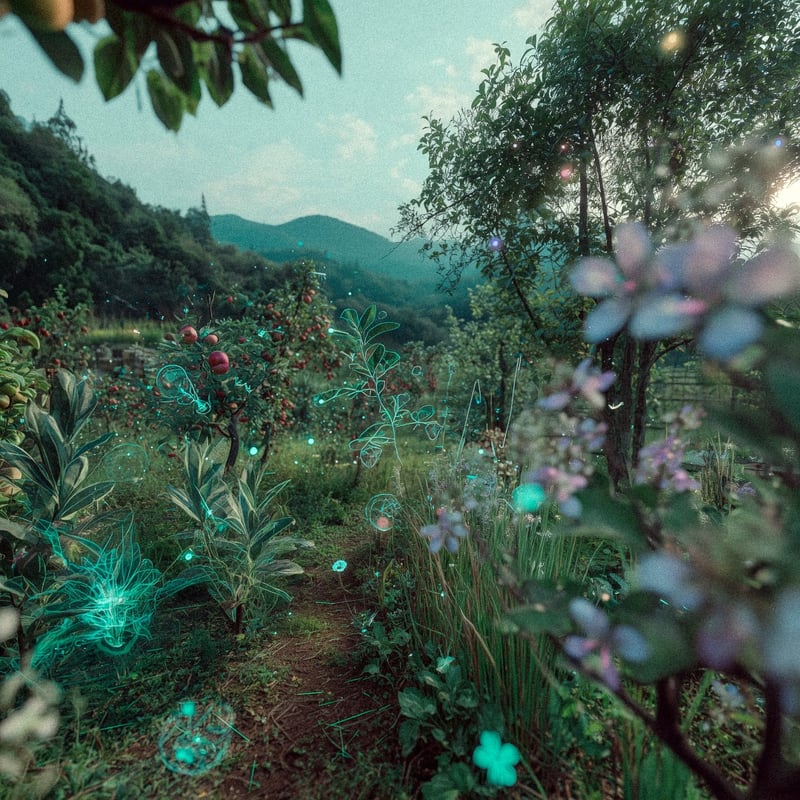
The slope is gradually being reforested. Trees planted now will outlive their planters. Shrubs and fruit trees operate on longer horizons, yielding across decades. Herbs and flowers draw pollinators into the system and slowly shift the soil’s capacity. The project works across multiple temporal registers: the immediate (transaction, code, confirmation), the seasonal (plantings contingent on weather and accumulation), and the generational (oak, walnut, linden, species that measure time in decades, sometimes centuries).
The inscription
Each tree and shrub receives its own marker; herbs are grouped and share one. Names are inscribed in the hybrid notation as a compact triad: plant, name, date of dedication. The markers hold legible for at least ten years. If a plant fails, it is replanted. Dedication functions as a commitment that leaves a trace and requires tending.
How it works
Choose a plant. Name it. Leave a message. Complete your contribution. You receive a Zvjezdunika code. Your plant appears in the online garden as an entry with its inscription. When enough plants accumulate, we organise a planting. After planting, you receive a photograph and the exact coordinates.
Garden · Lavanda · dedicated to Ana · first of its kind · 15 EUR · 2026.
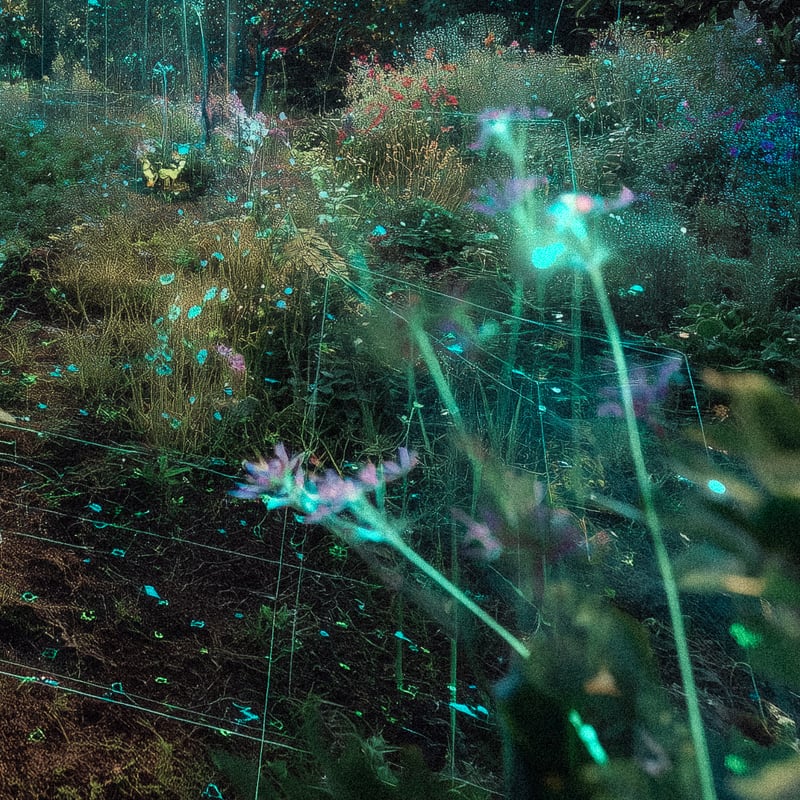
What you can plant
A doorstep plant across Bosnia, associated with protection and steadiness. Its name translates as “house-guardian.” After three months, you receive a small package from the garden.
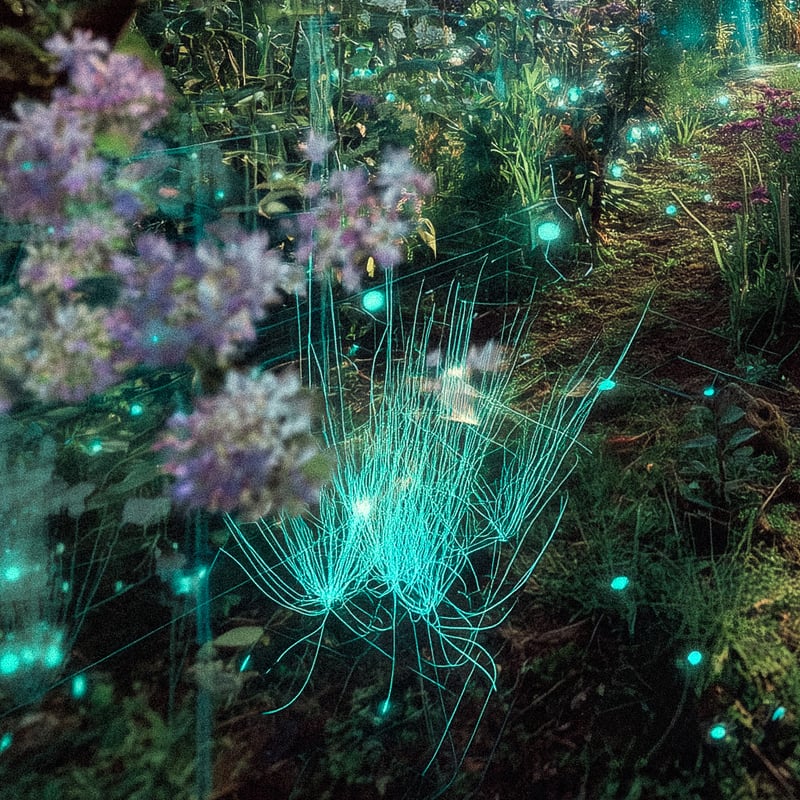
Lavender, mint, St. John’s wort, mountain tea, hibiscus, valerian, lemon balm.
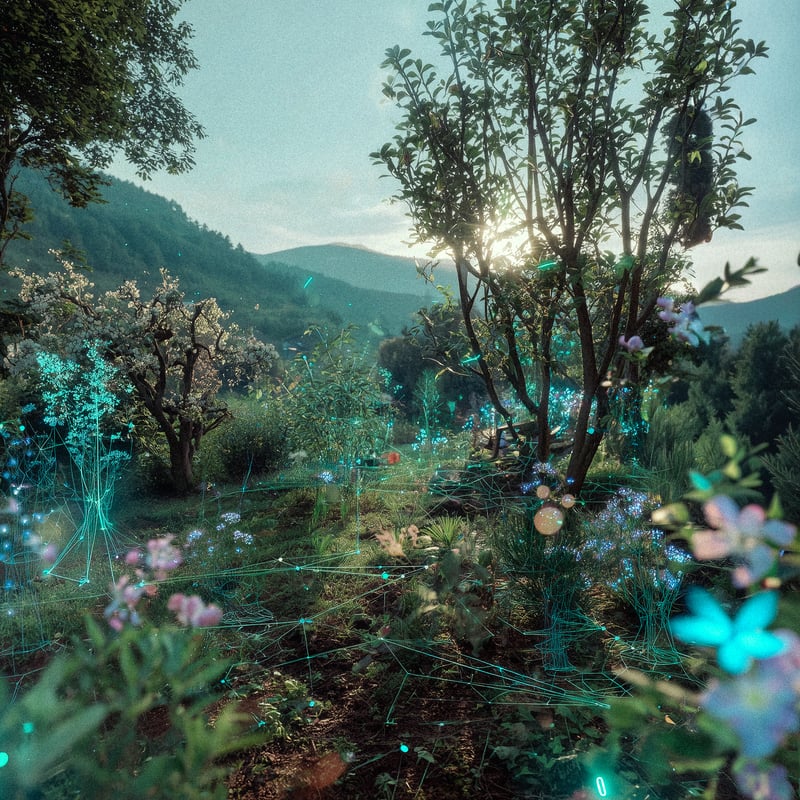
Lilac, elder, damask rose, plum, apple, sour cherry, cornelian cherry.
Pine, spruce, fir, walnut, linden, maple, oak.
All categories are one-time contributions.
Access
The physical garden is open to visitors. The online garden is always accessible.