Mijakovići
A village in Bosnia and Herzegovina
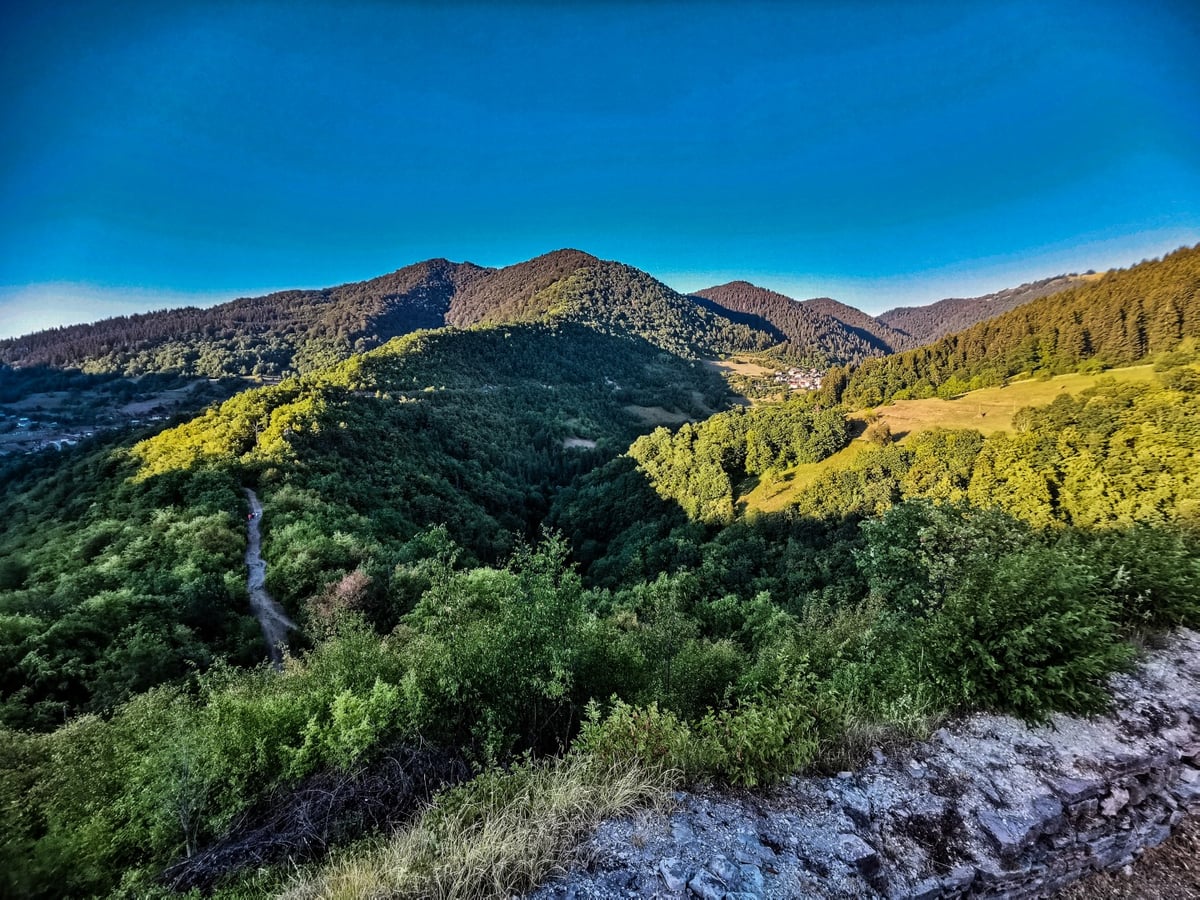
The village of Mijakovići lies in Bosnia and Herzegovina, on the slopes of Mount Perun in the massif of Zvijezda, between the towns of Vareš and Olovo. From the village one looks down on the ruins of Bobovac, the medieval royal seat that fell to the Ottomans in 1463, and onto a landscape of deep forest and mountain that extends without visible interruption from most of the surrounding ground. Stećci, the carved medieval tombstones inscribed in the UNESCO World Heritage List, are scattered across the surrounding terrain.
A microcosm
I read this region as a microcosm of what has happened to the post-Yugoslav space. The medieval Bosnian kingdom fell here to an empire that itself fell to other empires. Industrialization across the nineteenth and twentieth centuries built the region and employed generations. The factories and infrastructure it produced were destroyed in the wars of the 1990s. Their ruins still stand as monuments to that hatred and to what it took with it. Since then, the post-war condition has been called transition for three decades, and the transition shows no sign of arriving anywhere. In the past two years, a new corporate extractive operation began production, within range of a protected forest and within the same watershed as springs that supply tens of thousands of people downstream. Throughout, subsistence cultivation has continued, carried by the same households for generations, alongside remittance from a diaspora that keeps growing. Utopia and dystopia, peace and aftermath, conservation and extraction operate as conditions of one terrain at the same hour.
The warmth
What none of this conveys, and what cannot be left out, is the warmth. The hospitality of this place is the kind that holds steady through everything that should have undone it: the war, the political lie of transition, the brain drain. It remains as it is, in the next coffee, the next conversation, the next concert. This is one of the reasons Zvjezdane Staze exists, which is to say that being received this way is not separable from what the project is.
Density
I do not claim that Mijakovići is unique. I claim that it is dense. What is dispersed across the post-Yugoslav landscape converges here in a small region within an hour by road. Whoever knows the post-Yugoslav context recognises it here in concentrated form.
Arrival
The artistic work that takes place in conditions like these begins from an individual practice and extends past what it represents. Each artist arrives with the formed practice she has built, with her habits of perception and her (unresolved) questions, and places that practice in working relation to the historically layered, materially contradictory, humanly weighted density of this terrain. What follows from such an encounter is irreducibly the artist's own. The work may transcribe what she finds, or transform it past recognition, or carry it as a structuring presence that does not need to be named. What the artist makes here, or after here, travels as spores travel, carrying this place into futures we cannot foresee.
Ovo je to što jeste. Mi smo to što jesmo.
This is what is. We are what we are.